
Picture this: Your company launches a major transformation initiative. Everything starts perfectly—teams are motivated, early milestones are achieved, and success seems guaranteed. But then, slowly, things begin to unravel. Deadlines start slipping, costs creep higher, and that initial enthusiasm fades away.
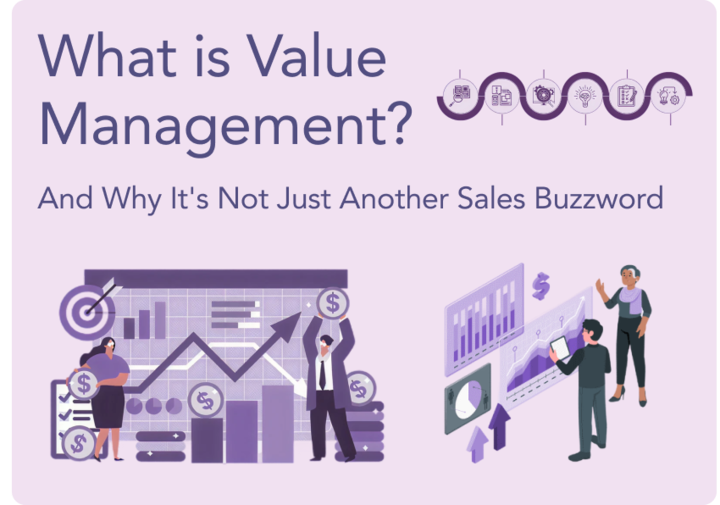
What went wrong? Usually, it’s not due to poor planning or a lack of effort. It’s something more fundamental: poor value management.
At ValueCore, we’ve seen this story play out countless times.
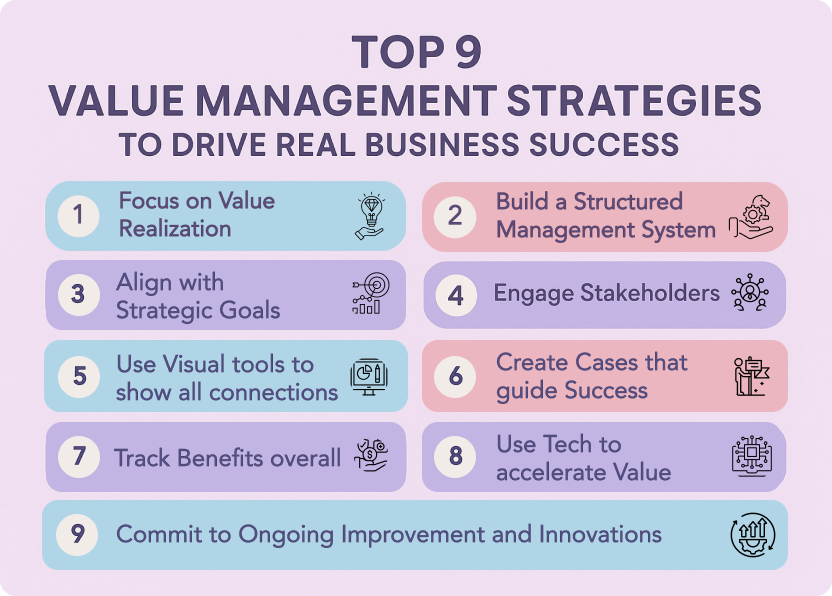
The good news? It’s completely preventable. Here are 9 proven strategies that separate successful transformations from expensive failures.
1. Focus on Value Realization, Not Just Task Completion
Most organizations make a critical mistake—they assume value automatically appears once a project is finished. Real value realization means actively tracking and measuring the benefits you promised. A healthcare organization we worked with didn’t just implement its new digital system and call it a day. They continuously monitored patient outcomes, administrative efficiency, and improvements in care quality.
The result? They discovered an additional revenue in value that wasn’t even in their original business case.
The key is treating value realization as an ongoing process, not a one-time event.
2. Build a Structured Benefits Management System
Without proper benefits management, your transformation becomes a ship without a compass. You might move fast, but you’ll likely end up somewhere you didn’t intend to go.
When enterprises roll out a new digital platform, focusing only on deployment often leads to missed opportunities. With structured benefits management in place, leaders can track measurable improvements—such as reduced operational costs, faster process cycles, and stronger customer engagement. Instead of seeing the initiative as just “technology delivery,” they gain a clear line of sight into how every investment drives business value.
3. Align Everything with Your Strategic Goals
Every transformation initiative should be tied directly to long-term business objectives. If it doesn’t contribute to growth, efficiency, or competitive advantage, it’s the wrong investment.
For large enterprises prioritizing customer experience, for example, every project in their portfolio should have a measurable impact—whether that means higher NPS, faster service cycles, or improved digital adoption. Projects that cannot be linked to these outcomes should be re-scoped or eliminated.
McKinsey’s State of Organizations 2023 report shows that companies with top-quartile organizational health—defined as the ability to align on a shared vision, execute it effectively, and continuously renew themselves—achieved total shareholder returns three times higher than those in the middle quartile (2017–2022). Alignment isn’t just about checking boxes; it’s about ensuring every dollar spent moves the organization closer to its strategic vision.